

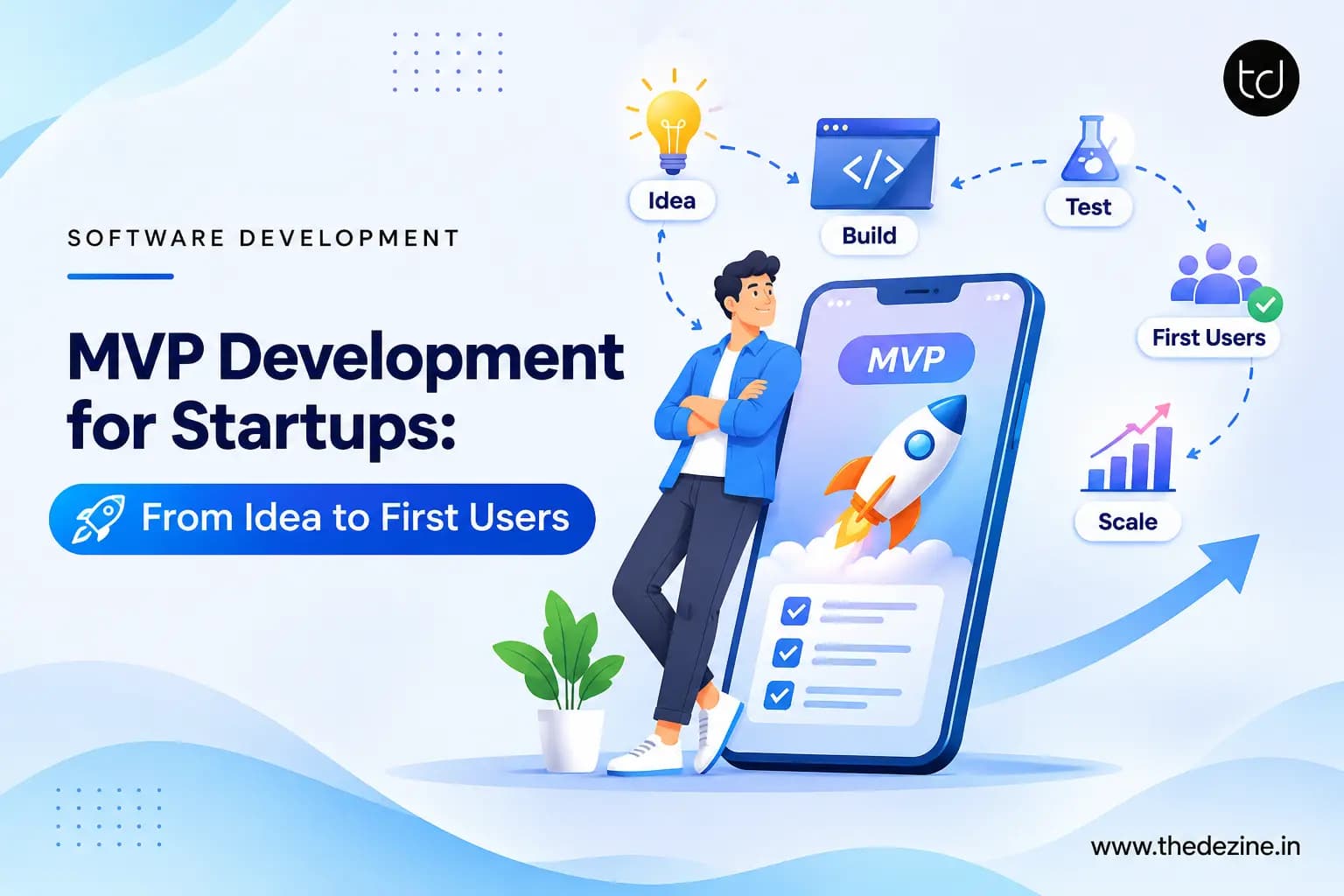
An early product can answer a question that a pitch deck cannot settle on its own. Will the people you want to serve use your solution when they run into the problem? A minimum viable product, or MVP, gives a specific group of users a way to complete a real task and gives your team evidence about what to build next. Start by naming the decision the launch should help you make. A scheduling startup might want to learn whether clinic staff will move recurring bookings out of a spreadsheet. That question gives the team a clearer scope than a goal like building an all-in-one clinic platform.
What Should a Startup MVP Include?
Build the smallest complete workflow that delivers the promised outcome. For the clinic scheduling example, staff might need to see open slots, create a recurring booking, and change or cancel an appointment. Automated reminders and reporting can wait if they are outside the question the pilot is designed to answer. The workflow still needs to be dependable enough for the trial. Include the access controls, clear error messages, and recovery steps appropriate to the data and tasks involved. A failed booking with no confirmation can make it hard to distinguish a product concept that needs work from a basic usability problem.
How to Build and Launch an MVP
- Talk to people who experience the problem. Ask them to walk through the last time it happened, which tools they used, and where they lost time.
- Write down one assumption to test. For example, clinic staff will use a shared booking tool for recurring appointments if they can make changes during a patient call.
- Map the workflow from start to finish. Specify the result a user should reach, the common errors they might encounter, and what the team can handle manually during the pilot.
- Test a prototype with representative users before development. Watch them attempt a realistic task and use the session to clarify confusing steps.
- Release the MVP to a small group that has the problem often enough to try it during the pilot. Give users a way to report issues and arrange follow-up conversations.
What Affects the Cost and Timeline of MVP Development?
Estimate the core workflow along with design, testing, deployment, and support for the initial users. A browser-based pilot with manual onboarding has a different scope from a product that needs native apps, calendar integrations, and imported customer records. Ask for an estimate tied to a usable milestone, such as a staff member creating and rescheduling a booking in a test environment. Clarify which dependencies could delay the pilot and budget time after launch to fix issues and review what users did.
How to Measure Whether Your MVP Is Working
Choose a measure tied to the outcome users came for. In the scheduling pilot, track how many participating clinics successfully create a recurring booking and how many return to manage appointments during the trial. Decide what result would justify a wider rollout before the pilot starts. Pair usage data with conversations. If staff open the app but finish bookings in a spreadsheet, ask where they switched tools and what they needed at that point. Repeated friction at the same step gives you a concrete change to test in the next release.
What to Do After the First Release
Review the pilot against your original assumption. If users complete the workflow and return, look for the next constraint on adoption. If they value the outcome but struggle to reach it, improve the workflow and test again. If the problem rarely comes up for the group you recruited, revisit who the product is for before expanding the feature set.
Planning an MVP With The Dezine
The Dezine helps startups turn an early product idea into a web or mobile application that real users can try. Bring the customer problem, what you have learned so far, and the decision you want the first release to inform. Together, we can define a pilot workflow and the scope needed to deliver it.