
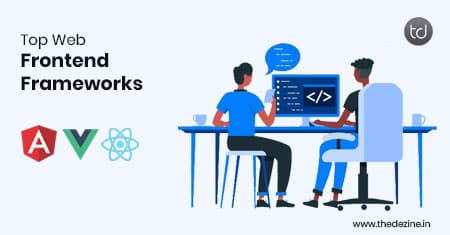
Choosing a frontend framework is one of the most important technical decisions a product team makes. The right stack speeds up delivery, keeps the UI consistent, and makes it easier to hire and scale. The wrong one creates rewrites, brittle components, and a painful hiring pipeline.
At The Dezine we evaluate frameworks the same way we evaluate product architecture: how fast can we ship a polished interface, how well does it hold up under real traffic, and how easily can a growing team maintain it two years later.
Why frontend frameworks still matter
Modern interfaces are no longer a handful of pages. They are dashboards, onboarding flows, design systems, and real-time experiences. Frameworks give you routing, state, component reuse, and a community that has already solved the hard problems.
- Reusable components that keep brand and UX consistent
- Strong ecosystems for forms, animation, and data fetching
- Predictable performance patterns for SEO and Core Web Vitals
- Easier onboarding for designers and engineers working together
React and Next.js for product teams
React remains the most practical choice for custom product work. Combined with Next.js App Router, it gives you server rendering, metadata, and a clean split between marketing pages and authenticated product surfaces — without maintaining two codebases.
When React is the right fit
If you need a design system, complex client interactions, and a long product roadmap, React is still the safest default. It also pairs well with TypeScript, which is how we keep large interfaces maintainable.
Vue, Angular, and when to look elsewhere
Vue is excellent when the team wants a gentler learning curve and a tightly integrated toolchain. Angular still shines in large enterprise applications with strict architecture, shared services, and long-lived internal products.
The framework is rarely the product. Clarity of information architecture, accessibility, and a disciplined design system will always matter more than the logo on the README.
How we choose a stack with clients
We start with the product, not the trend. Hiring market, existing code, SEO needs, and time-to-launch decide the stack. Then we build a component language that designers and engineers can share — so the interface stays premium as the product grows.